Sections

Poll: Current Poll

"Is the Arizona law to control illegals cross our border a good idea?"

Archive

Mo Tu We Th Fr Sa Su
12345
6789101112
13141516171819
20212223242526
27282930


Remember me
  • email Email to a friend
  • print Print version
  • Add to your del.icio.us del.icio.us
  • Digg this story Digg this

Did you enjoy this article?

(total 1 votes)


History, hope and hurdles

Adjust font size: Decrease font Enlarge font
image

History, hope and hurdles

Obama delivered an inaugural message that carried conservative themes, including personal responsibility and a muscular foreign policy. And his talk of leaving ‘the stale political arguments’ behind? Music to Cal and Bob’s ears.

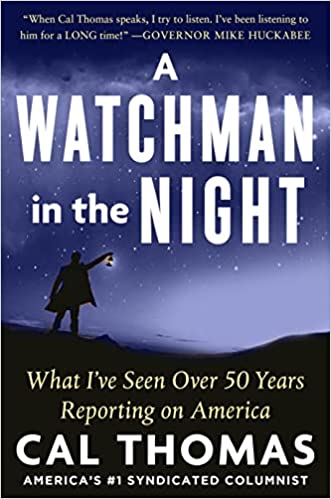
Cal Thomas is a conservative columnist. Bob Beckel is a liberal Democratic strategist. But as longtime friends, they can often find common ground on issues that lawmakers in Washington cannot. They co-wrote the book Common Ground: How to Stop the Partisan War That Is Destroying America.


(Minutes into his presidency: President Barack Obama, just after he was sworn in Tuesday / Heather Wines, Gannett News Service)

Today: President Obama's challenges.

Bob: I've seen many remarkable sights in my years in Washington, but none as remarkable as the sea of people stretching from the U.S. Capitol to the Lincoln Memorial for the inauguration of President Barack Obama. Where else but in America could more than a million people gather to witness such a peaceful transfer of power?

Cal: Only here. I've been on the National Mall to witness history before, including Martin Luther King Jr.'s "I Have a Dream" speech as well as massive anti-war marches. But nothing rivaled Tuesday's crowd. It was a wonderful celebration of America, though I worry too many people put too much faith in this politician to deliver all they want.

Bob: President Obama — how sweet the sound! — has the people's faith for good reason. And he articulated his vision quite effectively with one of the most powerful inaugural addresses of the modern political era. He had many riveting passages in the relatively succinct speech, but his call for "the price and the promise of citizenship" stood out to me. He's essentially saying that if we enjoy the benefits of America in good times, we have a responsibility to be part of the solution in difficult times.

Cal: I can't disagree with that sentiment. It's funny, though, how two people can hear the same address and come away with different impressions. I thought his election night speech in Chicago was much better, more passionate and more in tune with the audience.  Maybe he was flustered that Chief Justice John Roberts flubbed the oath.

Bob: Maybe Roberts was trying to stop another legitimate Democratic winner

but I digress! As to the speech, what about the substance of it, Cal? I mean, Obama was clearly speaking to conservatives, too. He went where Democrats have feared to tread in recent years with appeals to personal responsibility, values, and transparency in business and government. If the speaking style wasn't so masterful, I could almost close my eyes and imagine you giving parts of that speech.

Cal: In fact, I have given parts of that speech in your presence on more than one occasion. Who among us conservatives couldn't love the talk about taking care of yourself first and being accountable for your actions? I especially appreciated the part about doing away with government programs that don't work. But were you as enthusiastic when Ronald Reagan tried to do that? Or when George W. Bush attempted the Herculean task of reforming Social Security and Medicare? After all, Democrats opposed him. I want to see how your party's left-wing responds to all of this reform talk. As you know, every government program attracts constituencies.

Bob: You know as well as I do that it's not always the ends, but the means, in Washington.

Cal: Did anything Obama say surprise you?

Bob: His approach on foreign policy sounded muscular and robust, which is a welcome change for a Democratic president. He challenged terrorists with a flat, "We will defeat you." He said to the leaders of the world, people will "judge you on what you can build, not what you destroy." 

Cal: Well, he's a wartime president, and let's hope he's wise enough to know that our fanatical enemies fear strength and attack weakness.

Bob: Did you notice when he mentioned the great battles America had fought in "Concord and Gettysburg; Normandy and Khe Sanh"? The often-overlooked Vietnam War veterans surely welcomed the mention of Khe Sanh.

Cal: I did notice that and was equally pleased that he embraced those vets, many of whom still feel the pain of rejection from those who couldn't separate opposition to that war from hatred for those who served honorably. As for the Middle East, many presidencies have been sunk, or damaged, by their entry into that swamp. Many U.S. presidents have come into office believing they will offer something different that will bring peace to the region. They have all failed at some level. That's because it isn't about what we think or do; rather, it is about the objectives of many in the Arab and Muslim world, which is to eliminate Israel and then come after us. I wish Obama well, but recent history argues against him.

Bob: What has been unmistakable, beginning with his campaign, has been his appeal for consensus-building and building common ground. Here was music to my ears: "On this day, we come to proclaim an end to petty grievances and false promises, the recriminations and worn out dogmas, that for far too long have strangled our politics." And how about this? "What the cynics fail to understand is that the ground has shifted beneath them — that the stale political arguments that have consumed us for so long no longer apply." You buy that?

Cal: Indeed, though I would like to know which arguments he considers stale and on what he would compromise. Unless there is meat on this bone, we're left with just bone.

Bob: In time, my friend.

Cal: Too often, talk of compromise means we conservatives have to shift our positions without movement from the other side. While Obama's words are hopeful, I look back at previous inaugural addresses and find a lot of hope in the expressions of new presidents which didn't turn out as they, or the country, might have wished.

Bob: Such as?

Cal: Guess who spoke of finding us "rich in goods, but ragged in spirit; reaching with magnificent precision for the moon, but falling into raucous discord on earth. We are caught in war, wanting peace. We are torn by division, wanting unity." That was Richard Nixon in his first inaugural address. Things didn't turn out well for Nixon, or the nation.

Bob: Nixon was the exception, not the rule, in American politics. And I think even you agree that every man who steps into the Oval Office deserves our support — and prayers — in his earnest efforts to move this country forward.

Cal: I do hope Obama surpasses my expectations, and yes, he has my prayers.

Bob: Now let's see how the rest of Washington reacts to this new president.

Cal: That's the real trick. Obama has four years, but indeed, the key is Congress. Do they get the message, or do they only want the messenger while they continue with politics as usual? The now-former president George W. Bush expressed similar sentiments of unity in his 2001 inaugural address. Bush said then, "Civility is not a tactic or a sentiment. It is the determined choice of trust over cynicism, of community over chaos."

Bob: And cynicism won out.

Cal: Perhaps more to your liking was Bill Clinton's first inaugural address in which he rejected "change for change's sake," but called for "change to preserve America's ideals." If Obama can preserve our ideals — those from liberals, and some from conservatives — then perhaps he will be the president of all the people. Here's hoping that's what we'll see over the next four years.

  • email Email to a friend
  • print Print version
  • Add to your del.icio.us del.icio.us
  • Digg this story Digg this

Post your comment comment Comments (0 posted)


Development & Webhosting by WebKor   |   Vivvo CMS